How to Humanize AI Restaurant Menu Descriptions So People Order More
AI menu descriptions sound fake and hurt orders. Learn how to humanize restaurant menu descriptions with real ingredients and plain, tasty words.
AI can write a menu description for every dish in your restaurant in a few minutes. But read them back and you will notice the problem: "A symphony of flavors", "succulent", "artisanal", "a culinary journey", "tantalize your taste buds". Every dish sounds the same, and none of it sounds like your kitchen. Guests skim right past it, or worse, they don't trust it.
Good menu copy is short, specific and honest. It tells guests what's on the plate, how it's cooked and why it's worth ordering. This guide shows you how to take an AI draft and turn it into menu descriptions that sound like they came from someone who actually tasted the food.
Why AI menu descriptions don't work
AI menu text has clear patterns:
- Overused adjectives. "Succulent", "decadent", "mouthwatering", "exquisite", "delectable".
- Fancy metaphors. "A symphony of flavors", "a journey for your palate".
- Vague ingredients. "Fresh seasonal vegetables" instead of naming them.
- Too long. Three lines for a side dish.
- Same structure every time. Adjective, main ingredient, "perfectly paired with".
Guests read menus quickly, often in poor light or on a phone. Long, flowery text makes it harder to choose. For a list of words that give AI away, see words that make text sound like AI.
What makes a good menu description
A good description answers three questions in one or two lines:
- What is it? The main ingredients.
- How is it cooked? Grilled, slow-cooked, fried, raw.
- Why order it? The detail that makes it special: a sauce, a source, a story.
Optional extras: spice level, allergens, portion size, and whether it's a house favorite.
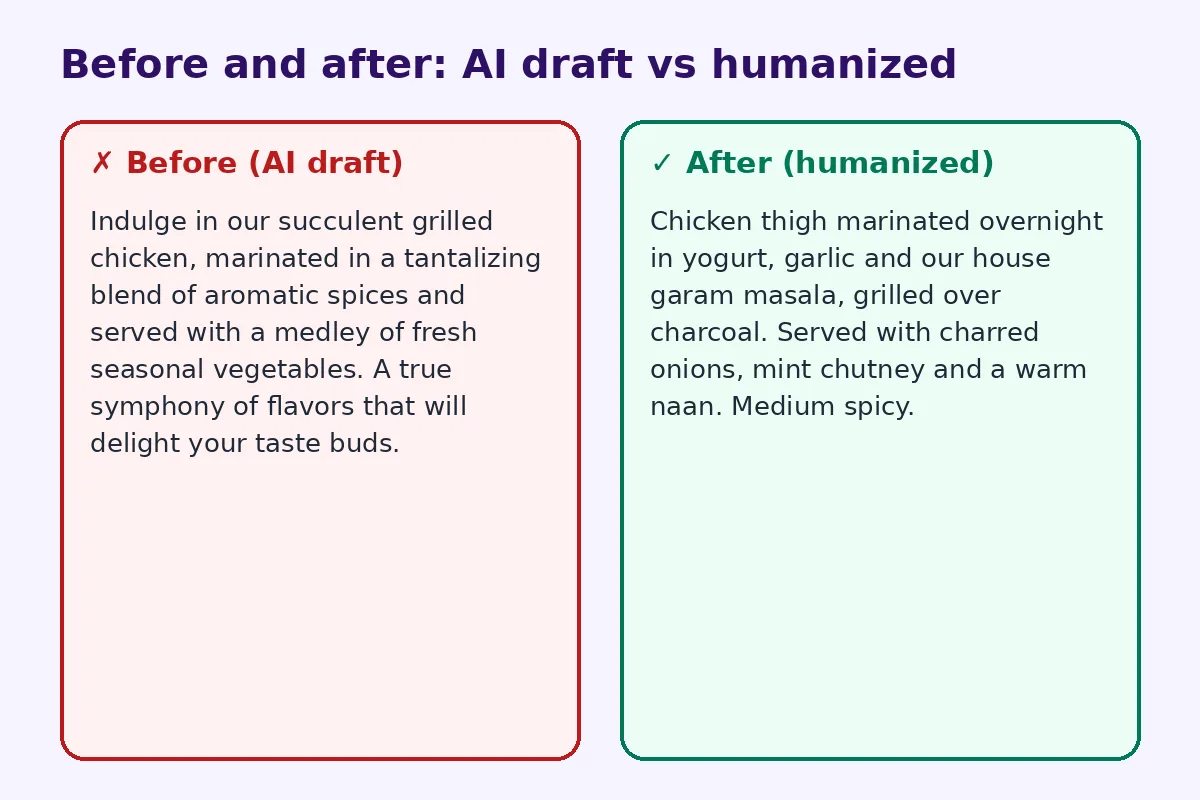
Before and after: a real rewrite
Before (AI draft):
Indulge in our succulent grilled chicken, marinated in a tantalizing blend of aromatic spices and served with a medley of fresh seasonal vegetables. A true symphony of flavors that will delight your taste buds.
After (humanized):
Chicken thigh marinated overnight in yogurt, garlic and our house garam masala, grilled over charcoal. Served with charred onions, mint chutney and a warm naan. Medium spicy.
The humanized version is shorter, names the ingredients and cooking method, and tells guests how spicy it is. It also sounds like it came from a real kitchen.
Step 1: Give the AI real details
Before prompting, list for each dish:
- Main ingredients
- Cooking method
- Sauce or seasoning
- Sides
- Spice level and allergens
- Anything special: local farm, family recipe, house-made bread
Then try: "Write a menu description under 25 words using only these details. Plain language. No words like succulent, symphony, indulge or tantalize."
Step 2: Cut the adjectives
Most menu descriptions need one adjective, or none. Instead of "delicious crispy golden fries", write "hand-cut fries, fried twice". The cooking detail suggests crispiness without saying it.
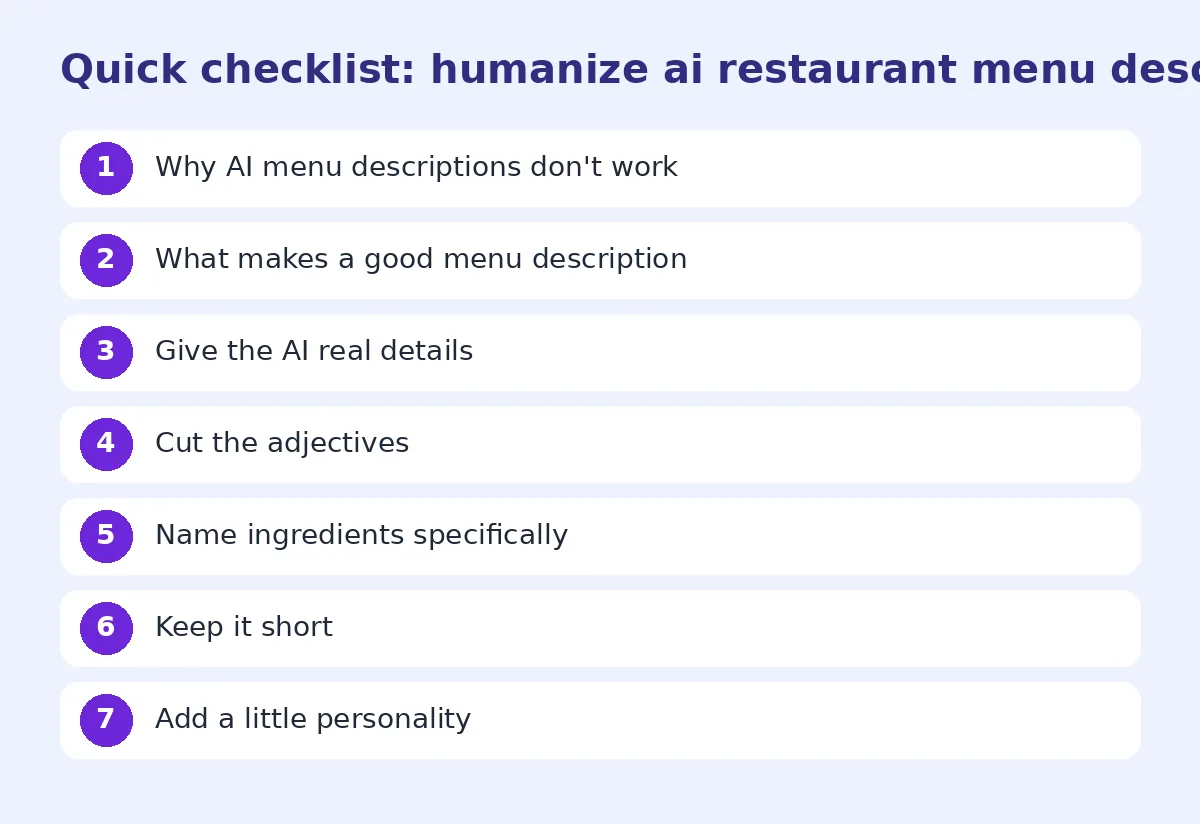
Step 3: Name ingredients specifically
"Fresh greens" becomes "rocket and baby spinach". "Cheese" becomes "aged cheddar". "Seasonal vegetables" becomes "roast carrots and beets" (and update it when the season changes). Specific names make dishes sound better and help guests with allergies.
Step 4: Keep it short
Aim for 10 to 25 words for mains and less for sides and drinks. If you need more space to tell a story about a signature dish, do it for one or two items, not all of them.
Step 5: Add a little personality
Your menu should sound like your restaurant. A family café might write "Grandma's recipe, unchanged since 1987". A street food stall might write "Messy. Worth it." One personal touch per section is plenty.
Step 6: Be honest
Don't call frozen fish "fresh" or a supplier's bread "house-made". Guests notice, and in many places it's against food labeling rules. Honest descriptions build trust and reduce complaints.
Online menus and QR code menus
Many guests now read the menu on their phone, either on a delivery app or by scanning a QR code at the table. Online menus have extra space for photos, allergen filters and longer descriptions, but the same rules apply: short, specific, honest. If you're setting up a menu QR code for your tables, our sister site has a step-by-step guide on how to create a QR code for a restaurant menu. Updating your descriptions online is also easier than reprinting a paper menu.
Menu descriptions and SEO
If your menu is on your website, descriptions can help with local search. Use the names guests actually search for ("chicken biryani", "vegan burger") and mention your area naturally on the menu page. Avoid stuffing keywords into every dish. Google rewards useful, clear pages. For more, read does Google penalize AI content.
Using a humanizer for a big menu
If you have a large menu or several locations, an AI humanizer can remove robotic phrasing from a batch of descriptions quickly. Our marketing copy humanizer is useful for menu intros, specials boards and delivery app listings. Always check ingredients and allergens after any rewrite.
Examples by dish type
Starter: "Crispy fried cauliflower, tossed in chili honey, with sesame and spring onion."
Main: "Slow-cooked lamb shoulder, six hours in the oven, with garlic yogurt and pomegranate."
Vegetarian: "Chickpea and spinach curry with coconut milk and a squeeze of lime. Vegan."
Dessert: "Warm chocolate brownie with salted caramel and vanilla ice cream."
Drink: "Fresh lime soda, sweet or salted."
Notice: no "succulent", no "symphony", no "indulge". Just what's on the plate.
Write specials the same way
Daily specials are often written in a hurry, and many restaurants now ask AI to write them for the board or social media. Keep the same rules: name the ingredients, the method and why it's special today. "Fresh catch from this morning: grilled sea bass with lemon butter and new potatoes" is enough. If you post the special online, add one human detail, such as which chef created it or why it's only available this week. It makes the post feel local and real.
Test your menu with real guests
Before you print, show the new descriptions to a few regular guests or staff members who did not write them. Ask which dish they would order and why. If they hesitate, or ask what something is, that description needs more clarity. Servers are especially useful here, because they hear guests' questions every night. If they keep explaining the same dish at the table, put that explanation into the menu itself, in a few plain words.
Common mistakes
- Writing the same adjective on every dish.
- Leaving out allergens or spice level.
- Descriptions that don't match what arrives on the plate.
- Using fancy words guests don't understand.
- Making descriptions so long the menu runs to many pages.
A quick checklist
- Under 25 words for most dishes
- Main ingredients named specifically
- Cooking method included
- One special detail
- Allergens and spice level where needed
- No clichés
FAQ
Can I use AI to write menu descriptions?
Yes, as a first draft. Then add specific ingredients, cooking methods and your restaurant's voice.
How long should a menu description be?
Usually 10 to 25 words for mains, less for sides and drinks.
What words should I avoid on a menu?
Avoid overused words like "succulent", "decadent", "symphony of flavors" and "tantalizing".
Should menu descriptions include allergens?
Yes, or at least clear symbols and a note to ask staff. Check local labeling rules.
Do menu descriptions affect sales?
Clear, appealing descriptions help guests choose and can increase orders of featured dishes.
Try FreeHumanizerAI for free
Humanize AI text instantly. No signup, up to 5,000 words per session, and your text is not stored.
Open AI HumanizerRelated guides
- GuideHow to Humanize AI Product Descriptions So They Actually SellAI product descriptions sound generic and hurt sales. Learn how to humanize them with real details, buyer language and a clear voice, with examples.Read
- GuideHow to Edit AI Content to Sound Natural: A Line-by-Line MethodA practical editing checklist for AI drafts, with worked examples. Fifteen minutes per article, no tricks, and the result reads like you wrote it.Read